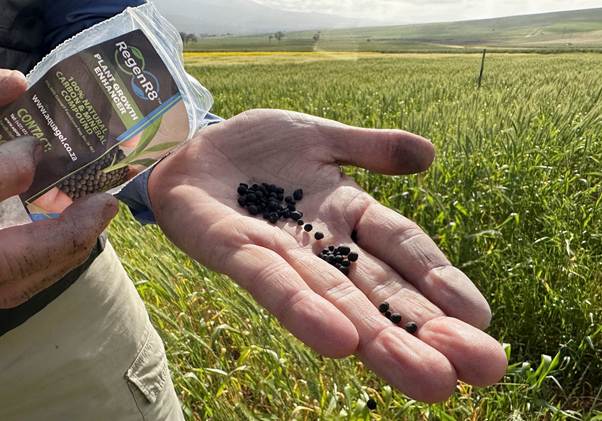
Pellet-sized samples of micronised volcanic rock and a combination of organic biochar, called Regenr8, on a wheat farm in Riviersonderend, South Africa, September 2, 2025. REUTERS/Shafiek Tassiem/File Photo
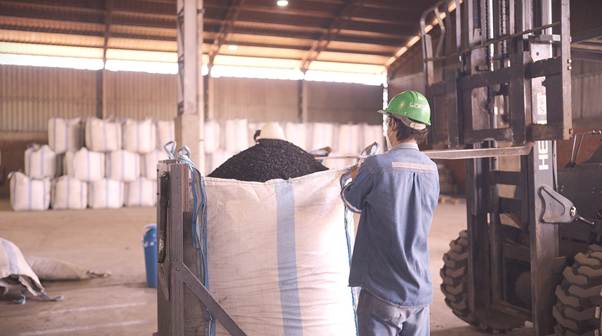
November 18 - As this year’s COP creaks towards its close, the climb towards achieving the Paris Agreement looks steeper than ever. Not only do new emissions look set to grow, but, with each passing year, the quantity of past emissions still in circulation are steadily growing. The latest data indicates that the concentration of carbon dioxide in the atmospheric is edging close to 425 parts per million (ppm), up from 399.4 ppm when the landmark Paris Agreement was signed in 2015. This uncomfortable truth is leading to a scramble among technologists to devise the best way not just to sequester current emissions but also to remove historical emissions, which have topped 1 trillion tonnes since 1990 alone. To date, much of the focus has fallen on ambitious geo-engineering solutions such as direct air capture (DAC) and bioenergy with carbon capture and storage (BECCS). Yet the early running in terms of actual removals achieved comes from a technology that has been in existence for millennia: biochar. Created from heating wood or other forms of biomass in a low-oxygen environment (a process known as pyrolysis), biochar is a charcoal-like material that has the capacity of locking in carbon for centuries. As word of the effectiveness and relative simplicity of pyrolysis begins to spread, so is demand slowly growing, with recent projections suggesting the global biochar industry could almost triple in value over the next seven years, to more than $2 billion. The “gold rush” label now being attached to biochar derives in large part from the sale of biochar-linked carbon credits. According to a recent report from carbon credit brokerage service, Supercritical, biochar comprised over 90% of all the deliveries of carbon dioxide removal (CDR) credits in the first half of 2025. Microsoft has purchased biochar credits from Exomad Green, an offshoot of a Bolivian wood company. Exomad Green/Handout via REUTERS
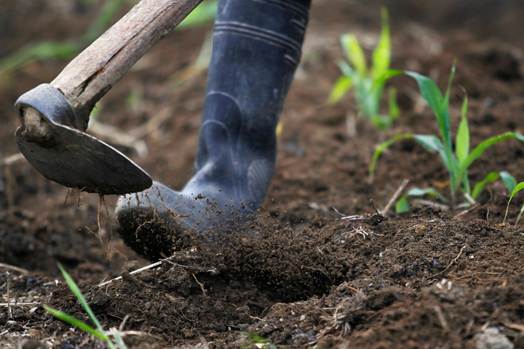
Biochar also has a range of practical applications that promise a secondary income, thus increasing their investment appeal. Its chief use to date is as a soil amendment to increase fertility, but markets are also opening up for its use as a filtering medium in water and air filtration, as a sustainable building material and as a supplement in animal feed, among others. Yet the report also throws up a major market bottleneck. For all its potential as a climate solution, it transpires that the current supply of biochar falls short of both the high demand of carbon credit buyers and the size of the planet’s legacy emissions problem. The issue is two-fold, explains Sandy Doran, supply lead at Supercritical. On the one side, the supply chain is still highly fragmented, with biochar producers using different technologies and adhering to different methodologies. Adding to this slightly disjointed picture is the question of size, with only a few reaching beyond the artisanal or small scale that typifies the sector to achieve anything close to industrial scale. On the other side, the demand dynamic is similarly skewed, with the pool of carbon credit buyers concentrated among a small handful of very large companies. The biggest buyer to date is Microsoft, which accounted for 63% of all biochar credit purchases last year. The U.S. tech giant is followed by a coalition of other global brands comprising Google, Shopify and H&M, among others. “The problem with only having a small number of buyers in the market is that they can't catalyse every single project out there. So we really need more buyers because without that many projects are struggling to get off the ground,” says Doran. Adding to the challenge is the kind of projects that these so-called “hyper buyers” are willing to invest in. With an eye to biochar helping them achieve their ambitious net zero commitments, their focus is squarely on individual projects that can deliver large volumes of credits. A worker turns soil containing biochar in a corn field in Peru. REUTERS/Enrique Castro-Mendivil
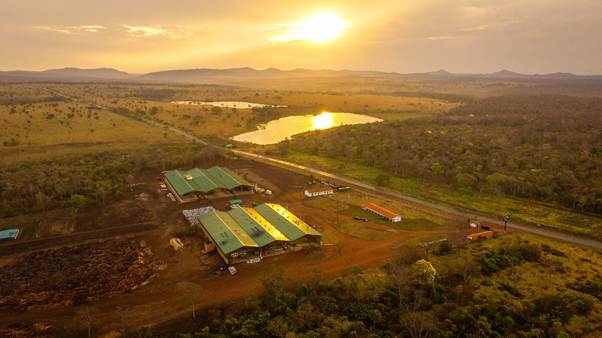
Such credits also need to be of high integrity, so as to avoid the reputational issues associated with conventional offset projects in the past. To meet the criteria of these hyper buyers, the industry has gained a reputation for over-promising and under-delivering. As Supercritical’s Doran notes: “Some projects have predicted 10,000 tonnes [of biochar] and produced zero, but mostly it’s a case of producers taking longer to scale up than anticipated or hitting delays due to unforeseen mechanical or workforce problems.” Not that the sector is without its success stories. Back in 2023, most notably, Microsoft committed to purchase 23,000 tonnes of credits from Exomad Green, the subsidiary of a Bolivian wood products company. After Exomad delivered, Microsoft announced its intention in May to extend its commitment to at least 1.24 million tonnes of carbon dioxide removal (CDR) credits over the next decade. Similarly, Google has recently entered into two high-profile deals, one with India-based biochar producer Varaha and another with U.S.-headquartered Charm Industrial. Both agreements are for 100,000 tonnes worth of credits, with delivery by 2030, a date that coincides with the target for Google’s “moonshot” goal of carbon neutrality. Even so, because of the current demand dynamic, most non-industrial biochar producers struggle to obtain forward contracts, admits Myles Gray, executive director of the United States Biochar Initiative (USBI). As he explains: “They [the large buyers] aren’t interested in sourcing a whole bunch of credits from lots of medium- and small-scale facilities. If nothing else, it costs too much in terms of due diligence. Instead, to meet their 2030 goals, they want larger projects.” The obvious solution is for small-scale biochar producers to follow the lead of the sector’s early industrial pioneers and scale up. However, doing so is not cheap. The opening price-tag for even a small industrial biochar facility exceeds $5 million, with larger scale projects costing many multiples more. Bolivian biochar producer Exomad Green has a projected capacity of 1 million tonnes by 2030. Exomad Green/Handout via REUTERS
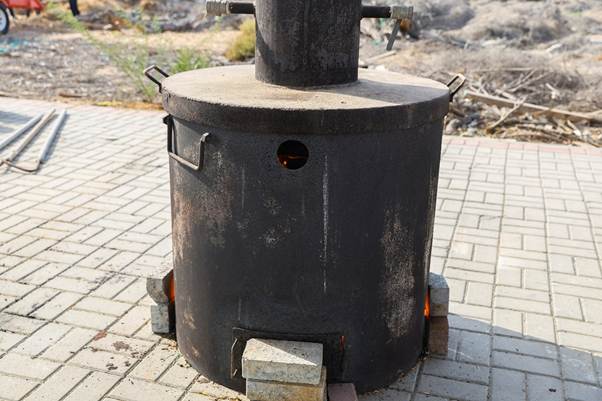
Attracting investment is therefore essential. So, how can biochar project developers persuade financiers to part with the capital necessary to take biochar to scale? One tactic when approaching financiers is to “pitch like an engineer”, says Alastair Collier, chief research and development officer at A Healthier Earth (AHE), a climate solutions firm and co-developer of a new large-scale biochar facility in Wiltshire, England. It’s an argument put forward by AHE in a new report on the “bankability” of biochar. At the heart of his engineering metaphor are two salient truths: first, that most institutional investors are conservatively minded and thus averse to above-average risk; and, second, that biochar has a “hippy” image that may raise eyebrows in most conventional investment committee meetings. “With biochar, we’re at the same inflection point that solar went through a few decades ago, when it changed from being seen as a niche technology to much more like boring infrastructure. But, the fact is, the more boring this industry seems, the more ready institutional participants will be to back it,” he reasons. Part of being “boring” lies in the standardisation of protocols and processes. Collier insists that this is gradually happening, thanks in no small part to the tightening requirements of those governing the voluntary carbon markets. To qualify for tradable credits, for instance, developers need to prove that their operations meet a raft of legal, social and environmental criteria set by independent standard-setters, such as Puro.earth, Carbon Standards International, Isometric and Verra. On top of this, rules set by separate validation and verification bodies, backed up by third-party audits, provide a second tier of assurance. Collected green waste burns in biochar unit at a research centre in Dubai, United Arab Emirates. REUTERS/Rula Rouhana
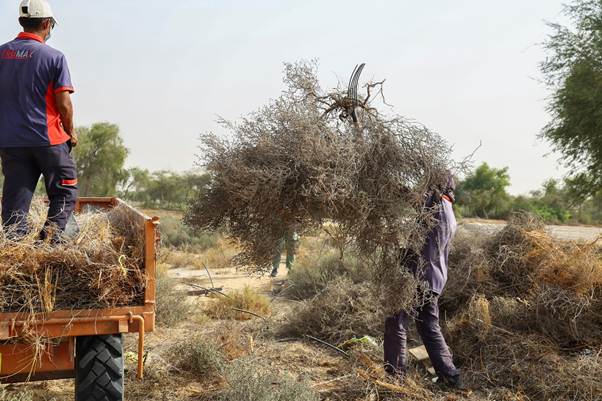
Much could be done to harmonise these competing standards, critics say. Yet one positive output of so many compliance stages is the reams of documentation that developers then have to place under the noses of sceptical financiers, says Collier. As important as showing that project risks are covered, investors also need convincing that a project’s economic projections are realistic. Here, locking in a carbon credit buyer is invaluable, as the guarantee of future credit sales effectively serves as collateral for obtaining debt or equity finance. The problem for developers is that offtake agreements come in multiple shapes and sizes, notes Ralf Rank, co-founder of Reinova, an investment firm specialising in energy transition infrastructure. “What investors want as far as bankability is concerned is pretty low-margin variability, which requires an integrated approach to the entire commercial framework of a project," he states. Integrated as a project’s framework may be, however, project developers aren’t holding all the cards. In fact, with just a few large buyers dominating the carbon credit market, landing a favourable offtake agreement can be tough. Hence, many existing deals stand out for the shortness of their duration (e.g. three years or less) and the inclusion of prejudicial terms (such as easy-to-enact break clauses and substantial discounts on forward sales). One possibility for biochar producers to bolster their negotiating power is pool their output, says Rank. Just as cooperative farmers aggregate their produce to improve their bargaining power in the market, so too can biochar suppliers group together to issue credits jointly, he suggests. Another strategy is to look to revenue streams alongside carbon credits. The sale of physical biochar is the most obvious, observes USBI’s Myles Gray. Although, again, market demand can prove problematic. Potential offtakers may lack the financial resources to pay a fair market price, for instance, as in the case of smallholder farmers in the global South. Also, large-scale producers can find their high production volumes are “mismatched” with comparatively lower regional demand, says Gray. A worker collects green waste as a biochar feedstock in Dubai, United Arab Emirates. REUTERS/Rula Rouhana
Other potential income options also exist. One increasingly popular earner is the sale of surplus heat to nearby industries or local district heating networks. Another is the receipt of fees for taking waste destined for landfill or incineration and using it instead as feedstock in biochar production. One developer embarking on just such a multipronged revenue model is the Green Carbon Factory, a Dutch startup that has developed a proprietary biochar process designed to run on existing industrial sites and business parks. In addition to producing physical biochar and associated credits, each of its wood-fuelled facilities is projected to generate up to 130,000 gigajoules of energy per year, explains the company’s co-founder and a former investment banker, Harold Joanknecht. “Our business model is based on income from the excess energy from our sites, plus the biochar itself, and then the [carbon] credits on top of that,” he explains. “For us, each is equally important, because with one missing the economics don’t work.” Securing investment finance is not the only challenge facing the nascent biochar industry. Regulatory changes, limited market knowledge, stable biomass supply and high production costs are just some of the other hurdles standing in the way of producers. That said, all are easier to address when project developers are well-capitalised. Counterintuitively, the game-changer here could be for biochar scale-ups to briefly step away from their day-to-day concerns about which pyrolysis machine to buy and what feedstock to source, advises James Kench, managing director of insurance at the carbon insurance specialist Kita Earth. Together with pitching more like engineers, biochar producers would do well to think more like bankers, Kench adds: “Developers tend to talk in science and engineering terms, while the financiers are just talking in terms of IRR (internal rate of return). Obviously, the fundamentals need to be sound, but speaking in bankers’ language makes it a whole lot easier to invest in."